Lecture 3 Managing Object-Oriented Projects
In This Lecture You Will Learn:
- System Proposal
- Project and Project Management
- Why We Plan
- What to Plan for
- Measures of Project Success
- Causes of Project Failure
- How to Create and Manage a Plan
- Preliminary Investigation
System Proposal
- Title of system
- Student’s name
- Major
- Supervisor
- Abstract
- Objectives
Project
A project is a [temporary] sequence of unique, complex, and connected activities having one goal or purpose and that must be completed by specific time, within budget, and according to specification.
Project Management
Project management is the process of scoping, planning, staffing, organizing, directing, and controlling the development of an acceptable system at a minimum cost within a specified time frame.
Process Management
Process management is an ongoing activity that documents, manages the use of, and improves an organization’s chosen methodology (the “process”) for system development. Process management is concerned with the activities, deliverables, and quality standards to be applied to all projects.
Measures of Project Success
- The resulting information system is acceptable to the customer.
- The system was delivered “on time.”
- The system was delivered “within budget.”
- The system development process had a minimal impact on ongoing business operations.
Causes of Project Failure
- Failure to establish upper-management commitment to the project
- Lack of organization’s commitment to the system development methodology
- Taking shortcuts through or around the system development methodology
- Poor expectations management
- Poor estimating techniques
- Over-optimism
- Inadequate people management skills
- Failure to adapt to business change
- Insufficient resources
- Failure to “manage to the plan”
Why Plan?
Two ‘folk wisdom’ sayings among IS development people:
“Failing to plan is planning to fail”
“If you can’t plan it, don’t do it”
- Systems development is complex dynamic
- May need to bid for resources
- Skills and careers
- Estimates and understanding the work
- Management and professionalism
- Meeting client requirements
- Failure can be spectacular:
- London Ambulance Despatch System
- £43M (and suspicion of some deaths)
- Mull of Kintyre Chinook crash
- 29 dead, including high-ranking police and military intelligence officers
- Pilots blamed by RAF Board of Enquiry, but many suspect software was at fault
- London Ambulance Despatch System
What To Plan For
- Big Picture!
- Tasks, dependencies and allocation to staff
- Control, performance management
- Quality
- Client liaison
- Procurement
- Installation, testing, training
- Contingency planning
Three slogans maybe sum it all up:
- Plan for success
- Manage change
- Manage risks
Creating and Managing a Plan
- Basic Techniques
- Product (or Work) Breakdown Structure
- Network Analysis (PERT Chart)
- Gantt Chart
- Specify tasks, dependencies
- Estimate duration, cost
Worked Examples
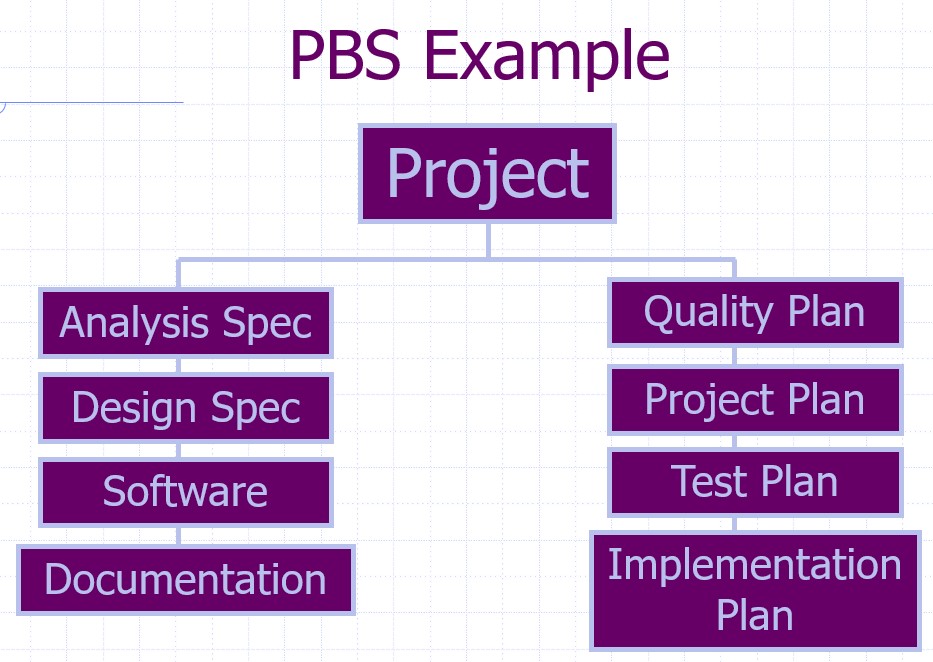
- Product Breakdown Structure
- A hierarchy of products or tasks
- Useful for:
- identifying tasks and products
- estimating total costs
PBS Example
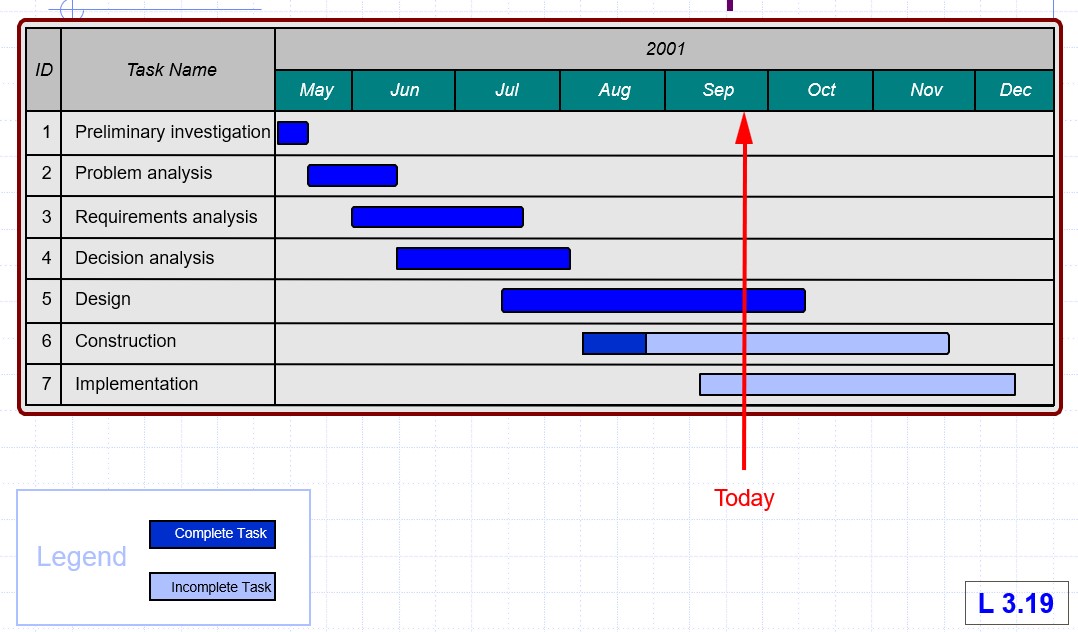
Gantt Chart
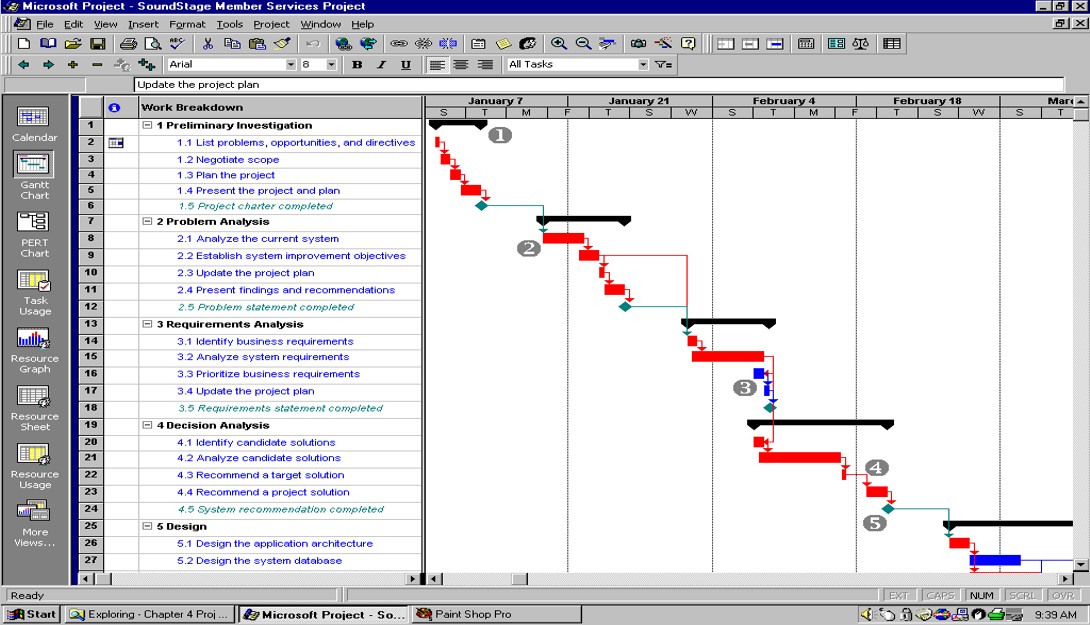
- Gantt Chart (or common bar chart) shows sequence and time of tasks
- Useful for:
- overall plan of simple projects
- identifying need for smoothing
- monitoring progress
Microsoft Project Gantt Chart
PERT
- Network/Critical Path Analysis
- Also known as PERT
- Program Evaluation and Review Technique
- Useful for:
- scheduling complex projects
- finding overall project time
- identifying dependencies
- identifying critical tasks
PERT Chart
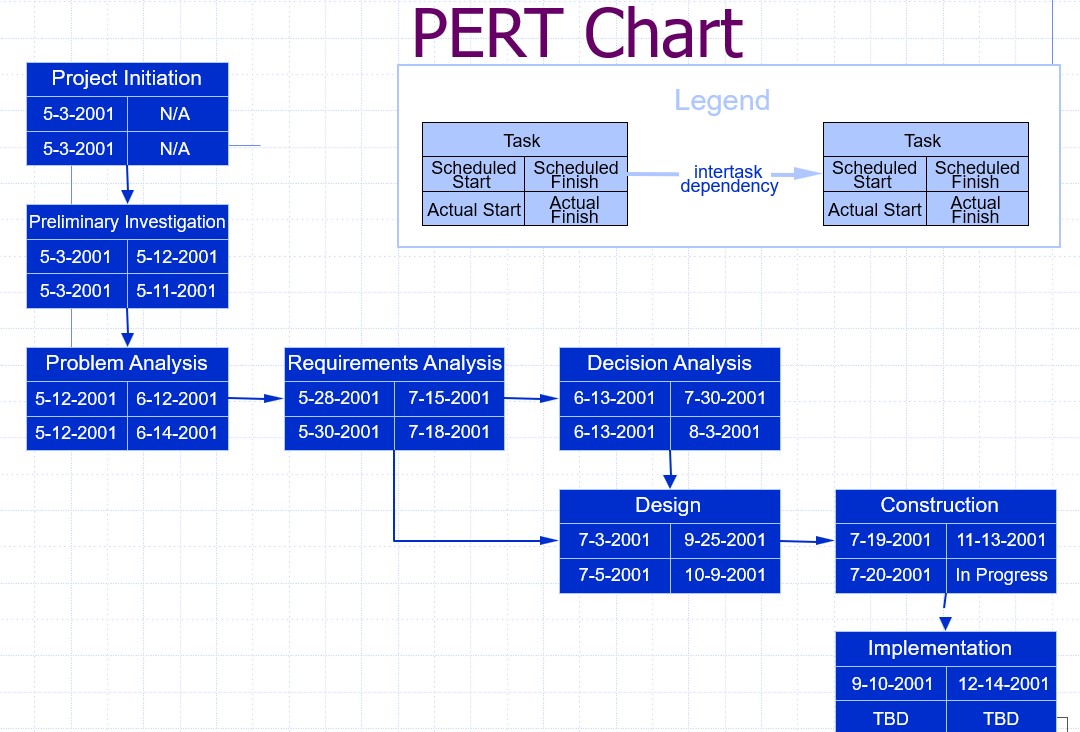
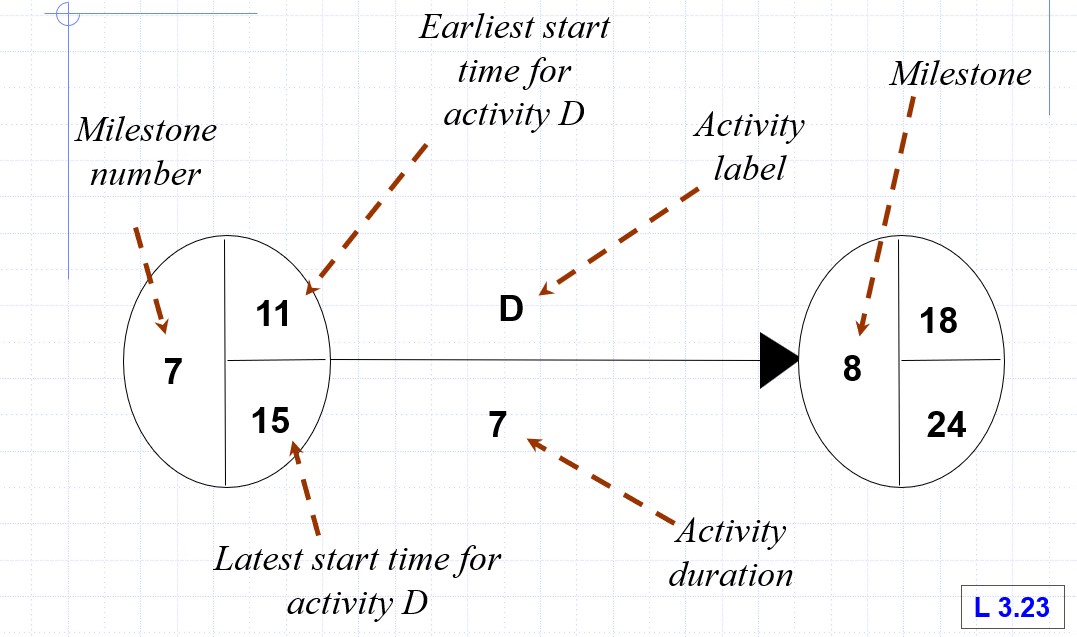
PERT Chart Notation (one of many styles)
Preliminary Investigation (PI)
Purpose
1st – Answer the question
- Is the problem worth solving?
- Problem, opportunities, directives
- triggered (started) the project
- Risk of pursuing the project
2nd – Is the project worth looking at?
PI Report
- Company overview – Org chart
- End users & departments needs
- Identification of the problem
- Suggestion for improvement
- Context – scope of project
- Constraints
- Budget – costs analysis
- Schedule – time require
- Resources – H/W & S/W
Company Overview – Organization Chart
- Introduction to the company
- what type of business are they in?
- History of the company
- when do they established their business?
- Operation of the company
- business processes
- Layout of organization
End Users & Departments Needs
- The aim of the new system
- the main operation of the new system
- Profit from using this system
- how new function improve the operation
- Other requirements for new system
- security design
Identification of the Problem
- Operation of old system
- process of carrying out a job (too slow)
- limitation and errors
- Interface design
- not easy to use
- don’t understand the function
Suggestion for Improvement
- Areas to improve
- operational part (process of carrying out tasks using the system)
- functionality
- New goal for project
- newer process of doing thing
Context – Scope of Project
- Size of the project (can be determined by)
- amount of data required (quantity)
- process required (how details)
- system interface (how many)
- Boundary of the system
- how far the system should cover
- how many subsystem
Constraints
- The limitation of the system
- what the system can’t do?
- e.g. user unable to get their ticket online
- hard to prevent user from abusing the system.
Budget – Costs Analysis
- Development
- Technology
- H/W, S/W, Network
- Professional fees
- Technology
- Operation
- Running the system
- Salary, electricity
Schedule – Time Require
- The duration of the project
- checkpoint for each sub-tasks
- when to deliver the required result
Resources – H/W & S/W
- Type of h/w & s/s required
- e.g. desktop, LAN, printer, OS, furniture
Summary
In this lecture you have learned about:
- System Proposal
- Project and Project Management
- Why we plan
- What to plan for
- Measures of Project Success
- Causes of Project Failure
- How to create and manage a plan
- Preliminary Investigation